
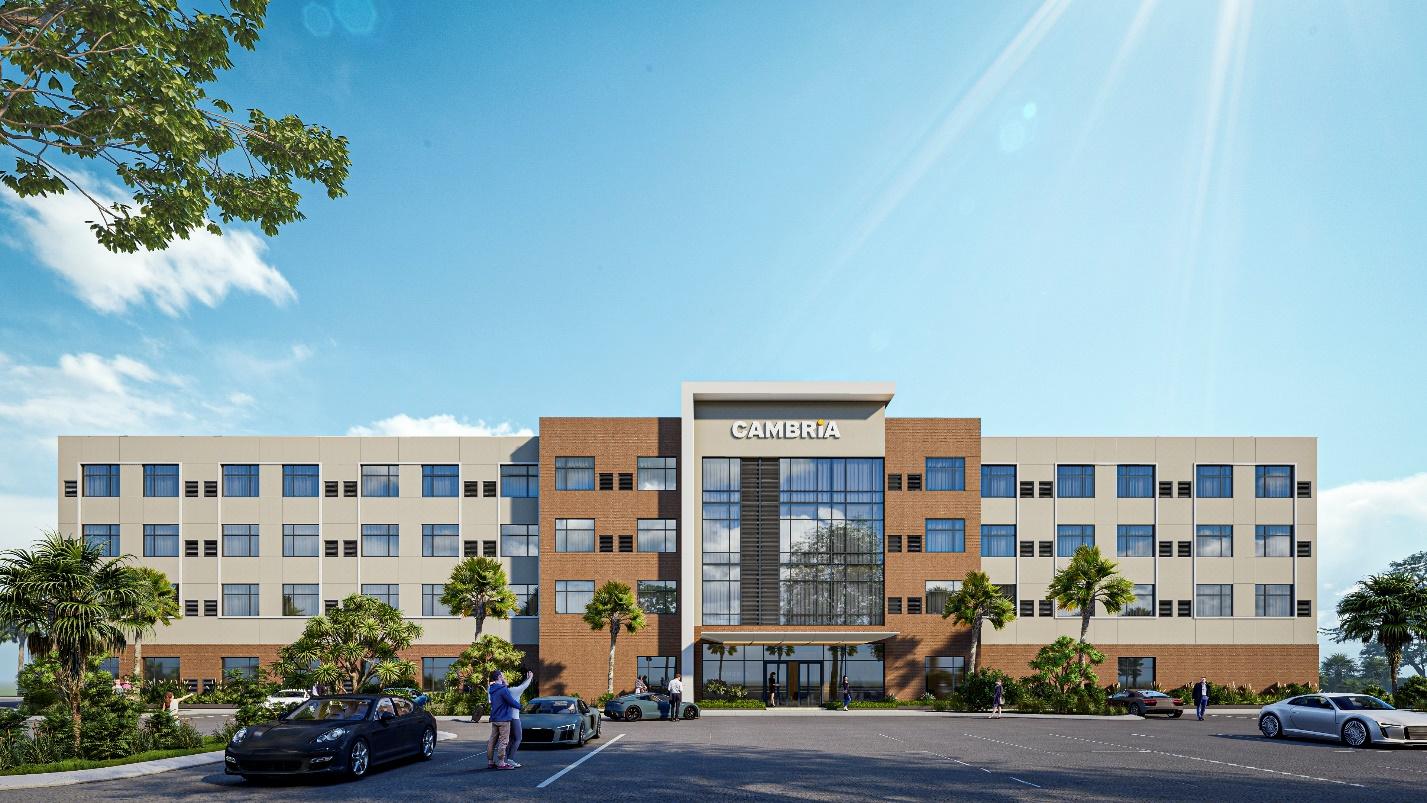
S3DA Design has successfully delivered the structural and MEP design submittal package for a new Cambria Suites hotel on Bullock Rd. & Hwy 62, Medford, Oregon. The project encompasses a 4-story building with 107 rooms, spanning 54,800 square feet. The design incorporates a podium structure and adheres to the Choice Hotel’s MEP standards.
Design Challenges:
A primary challenge was the discontinuity of the upper-level wood-framed shear walls at the ground floor. The open lobby layout prevented these walls from extending directly to the foundation, creating a complex load transfer path for lateral seismic and wind forces.
The hotel’s electrical loads required precise coordination with mechanical and plumbing systems to balance capacity and avoid overloads.
Achieving energy efficiency targets demanded integrated MEP strategies to minimize consumption while maintaining guest comfort.
Consistent MEP system design across the 2nd through 5th floors, as indicated by the repetitive floor plan references, requires precise coordination to ensure uniformity and scalability.
S3DA Solutions:
Instead of relying only on costly special moment frames, our team strategically disregarded the use of shear walls in some locations on the typical floors, in some cases that cannot continue to the foundations due to lobby conditions. We also collaborated with the architect to integrate appropriately sized shear walls within the exterior window facade, allowing them to serve as part of the lateral force-resisting system and simplifying the overall structural design.
Utilized compact, high-efficiency MEP equipment to maximize space utilization, ensuring compliance with the site plan constraints outlined.
Implemented variable refrigerant flow (VRF) HVAC systems and LED lighting with occupancy sensors to meet Title 24 requirements, reducing energy consumption while maintaining guest comfort.
Collaborated with civil engineers to align MEP utility connections with the site’s infrastructure and parking analysis, to streamline water, power, and drainage systems.
Key Design Features:
The project heavily utilized BIM coordination with Revit to meticulously integrate structural elements (walls, steel columns, moment frames) with MEP systems. This was particularly critical on the second floor above the lobby, where careful planning allowed mechanical ductwork to be concealed without requiring costly steel beam penetrations or increasing the floor-to-floor height.
Incorporation of VRF HVAC systems and LED lighting to reduce energy costs and comply with Title 24 standards.
Standardized MEP designs for the 2nd through 5th floors to simplify installation and maintenance, as shown in the repetitive floor plan
Integration of building management systems (BMS) for real-time monitoring and control of HVAC, lighting, and water systems to optimize performance.
Low-flow fixtures and greywater recycling systems to reduce water usage, aligning with sustainable design goals.


